
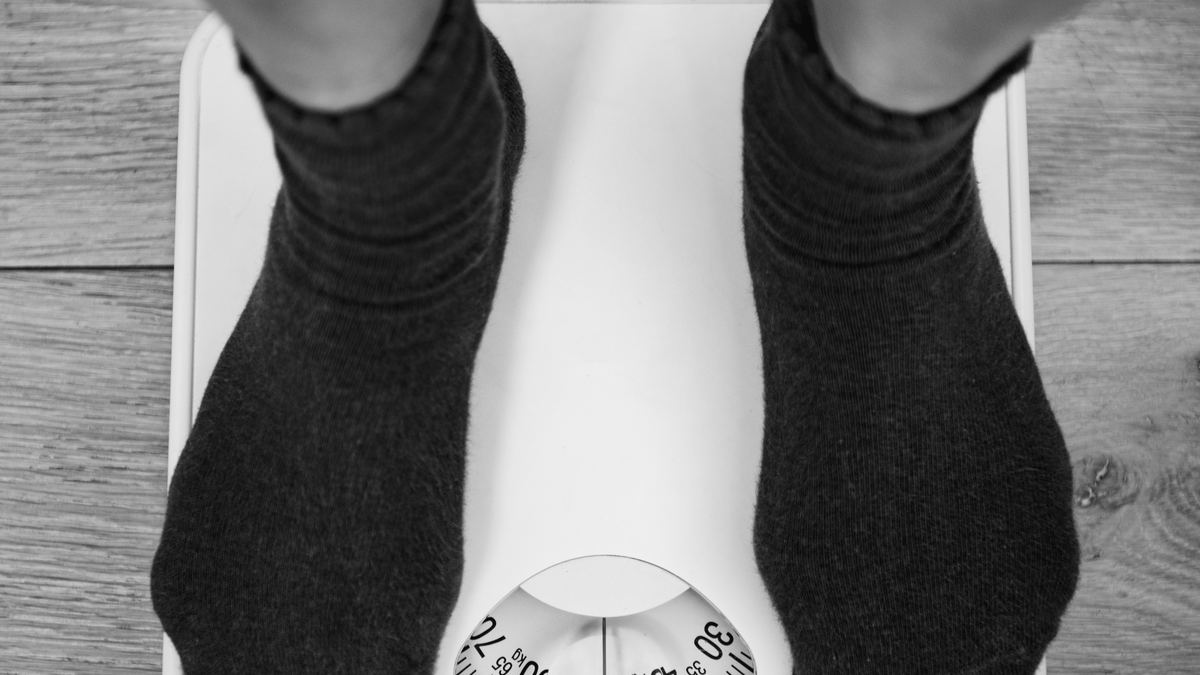
Yes, dieting lowers the number of calories you burn. Most of the drop is simple: a smaller body needs less energy. A smaller part is metabolic adaptation, also called adaptive thermogenesis, in which the body burns less than its new size predicts. “Starvation mode” in the sense of weight loss stopping completely is a myth, but the slowdown is real.
Key takeaways
- After weight loss, energy expenditure falls for two reasons: less body mass, and an extra adaptive drop.
- In most studies the adaptive part is modest, often tens to a couple of hundred calories a day. It was much larger after extreme, rapid weight loss.
- Hunger hormones also shift, which usually matters more for regain than the metabolic drop.
- Slower loss, enough protein and resistance training help protect muscle and energy expenditure.
What metabolic adaptation is
When you eat less than you burn, the body responds on several fronts:
- Resting metabolic rate falls as you lose tissue, and sometimes further.
- Movement costs less because you carry less weight.
- Spontaneous activity often drops. People move and fidget less while dieting, usually without noticing.
- The thermic effect of food falls because you eat less.
- Appetite rises. Leptin, the hormone that signals energy stores, falls, and hunger increases.
Adaptive thermogenesis is the part of the drop in energy expenditure that cannot be explained by the tissue lost.
What the classic studies show
The Minnesota Starvation Experiment
In 1944 and 1945, 32 healthy young men ate about half their usual calories for 24 weeks and lost roughly a quarter of their body weight. A 2015 re-analysis in the American Journal of Clinical Nutrition confirmed that their energy expenditure fell more than the loss of body mass predicted, and that the adaptive part appeared early in the restriction. This was semi-starvation in lean men, far beyond an ordinary diet.
“The Biggest Loser” follow-up
Researchers at the NIH followed 14 contestants from the television competition. They had lost an average of about 58 kg through extreme diet and exercise. Six years later they had regained about 41 kg on average, and their resting metabolic rate was still about 500 kcal a day lower than expected for their body size.
This is the most dramatic example on record. It involved very rapid loss under conditions most people never experience, and only 14 people. It shows that adaptation can persist, not that it is this large for everyone.
Typical weight loss
With moderate, slower weight loss, studies usually find a smaller adaptive drop, and some find that it shrinks once weight has been stable for a few weeks. Either way, the main reason a diet “stops working” is that the new, smaller body has a lower TDEE, so the original deficit has closed.
Why a plateau is expected
A mathematical model published in The Lancet shows that weight loss slows over time even when intake stays the same. As weight falls, energy needs fall too, until intake and expenditure match again. Half of the eventual weight change takes about a year, and 95 percent about three years. A plateau is the predicted result, not a sign that metabolism is broken.
How to limit the slowdown
Lose weight at a moderate pace
Very large deficits cause more muscle loss. Many guidelines suggest aiming for 0.5 to 1 kg (1 to 2 lb) a week or less.
Eat enough protein
Higher-protein diets, around 1.2 to 1.6 g per kg of body weight a day, help preserve lean mass during weight loss and improve fullness. See protein and metabolism. People with kidney disease should ask their doctor first.
Lift weights
Resistance training during a diet helps keep muscle, which supports resting energy use. See does building muscle increase metabolism?
Keep moving
Watch your step count. A drop in everyday movement is one of the easiest parts of adaptation to counter. See NEAT.
Protect sleep
In one controlled study, dieters who slept 5.5 hours lost 55 percent less fat, and more lean mass, than when they slept 8.5 hours on the same diet. See sleep and metabolism.
Frequently asked questions
Is my metabolism “damaged” after dieting?
There is no evidence of permanent damage from ordinary dieting. Energy needs are lower at a lower weight, and a modest adaptive drop may persist while you are below your previous weight.
Do “refeeds” or diet breaks fix adaptation?
Evidence is limited and mixed. Planned breaks may help some people stick to a diet, but they have not been shown reliably to restore metabolic rate.
Does eating too little stop weight loss?
No. A real calorie deficit always leads to loss of body mass over time. Very low intakes do increase muscle loss, tiredness and the risk of nutrient deficiency, and need medical supervision.
Sources
- Müller MJ, et al. Metabolic adaptation to caloric restriction and subsequent refeeding: the Minnesota Starvation Experiment revisited. Am J Clin Nutr. 2015.
- Fothergill E, et al. Persistent metabolic adaptation 6 years after “The Biggest Loser” competition. Obesity (Silver Spring). 2016.
- Hall KD, et al. Quantification of the effect of energy imbalance on bodyweight. Lancet. 2011.
- Leidy HJ, et al. The role of protein in weight loss and maintenance. Am J Clin Nutr. 2015.
- Nedeltcheva AV, et al. Insufficient sleep undermines dietary efforts to reduce adiposity. Ann Intern Med. 2010.
Featured photo: rawpixel.com / Freepik