
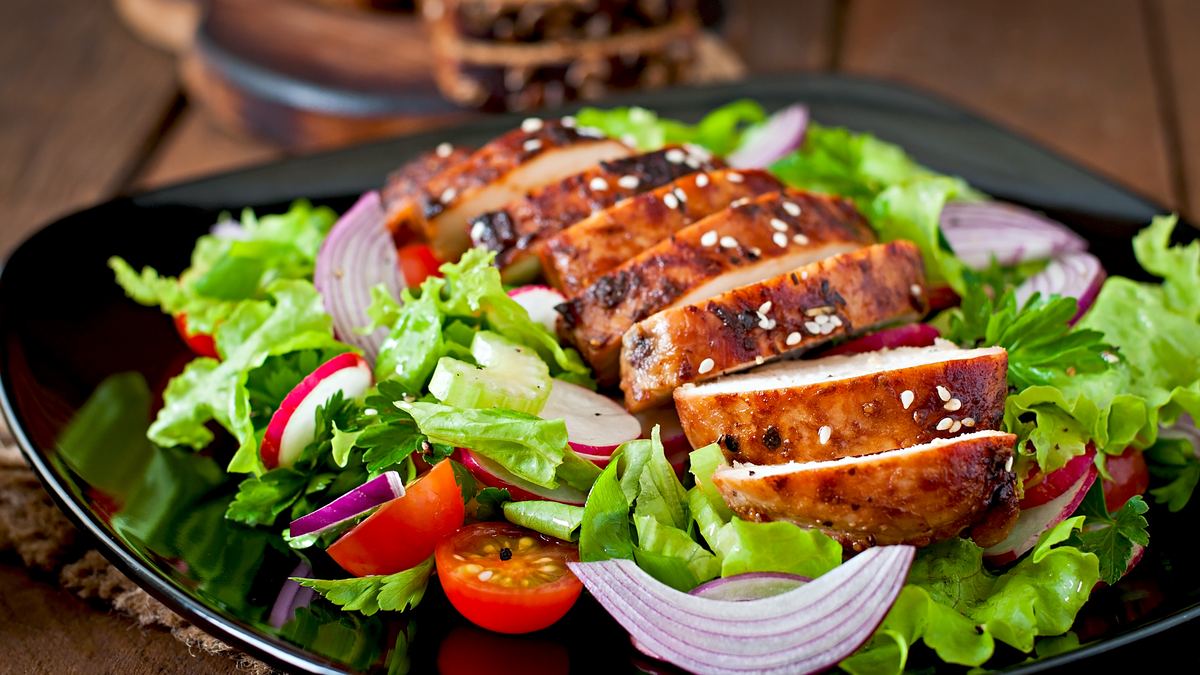
Protein affects metabolism in three ways: it takes the most energy to digest, it keeps you full longer, and it helps you keep muscle. None of these effects is dramatic alone, but together they make protein the most useful nutrient for managing energy balance.
Key takeaways
- 20 to 30 percent of protein’s calories are spent digesting and processing it.
- The minimum recommended intake for adults is 0.8 g per kg of body weight a day.
- Research on weight management and muscle supports 1.2 to 1.6 g per kg a day, with 25 to 30 g per meal.
- People with kidney disease should not raise protein intake without medical advice.
Three ways protein affects metabolism
1. A higher thermic effect
The thermic effect of food is the energy spent digesting, absorbing and storing nutrients. For protein it is 20 to 30 percent of the calories eaten, against 5 to 10 percent for carbohydrate and 0 to 3 percent for fat. Eat 100 kcal of chicken breast and your body spends 20 to 30 of them on processing.
2. More fullness
Protein is the most filling macronutrient. Reviews of controlled trials find that higher-protein meals increase satiety and that higher-protein diets tend to reduce calorie intake without deliberate restriction.
3. Muscle protection
During weight loss, part of what you lose is lean tissue. Eating more protein, especially together with resistance training, shifts the loss toward fat. Keeping muscle helps maintain resting energy use and physical function. See metabolic adaptation.
How much protein do you need?
| Goal | Daily protein | 70 kg (154 lb) adult |
|---|---|---|
| Minimum for healthy adults (RDA) | 0.8 g/kg | 56 g |
| Weight management, appetite control | 1.2–1.6 g/kg | 84–112 g |
| Building muscle with resistance training | About 1.6 g/kg | About 112 g |
The RDA of 0.8 g/kg is the amount that prevents deficiency in nearly all healthy adults. A review in the American Journal of Clinical Nutrition concluded that diets with 1.2 to 1.6 g/kg a day, including 25 to 30 g of protein per meal, improve appetite control, body weight management and cardiometabolic risk factors compared with lower-protein diets.
If you carry a lot of body fat, base the calculation on a goal weight or ask a dietitian, because protein needs follow lean mass.
Spread it across the day
Most people eat little protein at breakfast and most of it at dinner. Aiming for 25 to 30 g at each meal is a simple way to reach the daily total and may support muscle better than one large serving.
What 25 to 30 g of protein looks like
- 100–120 g (about 4 oz) cooked chicken breast, turkey or lean beef
- 120–150 g (about 5 oz) cooked salmon or white fish
- 4 large eggs
- 250–300 g (about 1¼ cups) Greek yogurt
- 1 cup cottage cheese
- 150–200 g firm tofu
- 1½ cups cooked lentils or beans
- 1 scoop of most protein powders
Values are approximate and vary by product. Check the label.
Does it matter where protein comes from?
Animal proteins contain all essential amino acids in high amounts. Most plant proteins are lower in one or more of them, but a varied plant-based diet with legumes, soy, grains and nuts covers needs. Fish, legumes, poultry and low-fat dairy fit general heart-health guidance better than large amounts of processed meat.
Is a high-protein diet safe?
For healthy adults, intakes in the range above are considered safe. Exceptions and cautions:
- Kidney disease: higher protein can speed the decline of kidney function. Follow your doctor’s advice.
- Balance: protein should not push out vegetables, fruit, whole grains and healthy fats.
- Calories still count: extra protein on top of an unchanged diet adds calories.
How much difference does it make?
Raising protein from 15 to 30 percent of a 2,000 kcal diet increases the thermic effect of food by very roughly 60 to 90 kcal a day. The larger benefits are eating less without feeling hungrier and keeping more muscle as you lose weight.
Frequently asked questions
Does protein before bed boost metabolism?
Timing has little effect on energy expenditure. Total daily intake matters most.
Can I eat too much protein in one meal?
Your body digests and absorbs large servings. Spreading protein out is a matter of convenience and muscle support, not a hard limit.
Do I need protein shakes?
No. They are a convenient option when food falls short. Whole foods provide the same protein along with other nutrients.
Sources
- Westerterp KR. Diet induced thermogenesis. Nutr Metab (Lond). 2004.
- Leidy HJ, et al. The role of protein in weight loss and maintenance. Am J Clin Nutr. 2015.
- Halton TL, Hu FB. The effects of high protein diets on thermogenesis, satiety and weight loss: a critical review. J Am Coll Nutr. 2004.
- U.S. Department of Agriculture and U.S. Department of Health and Human Services. Dietary Guidelines for Americans.
- NIDDK. Eating Right for Chronic Kidney Disease.
Featured photo: timolina / Freepik