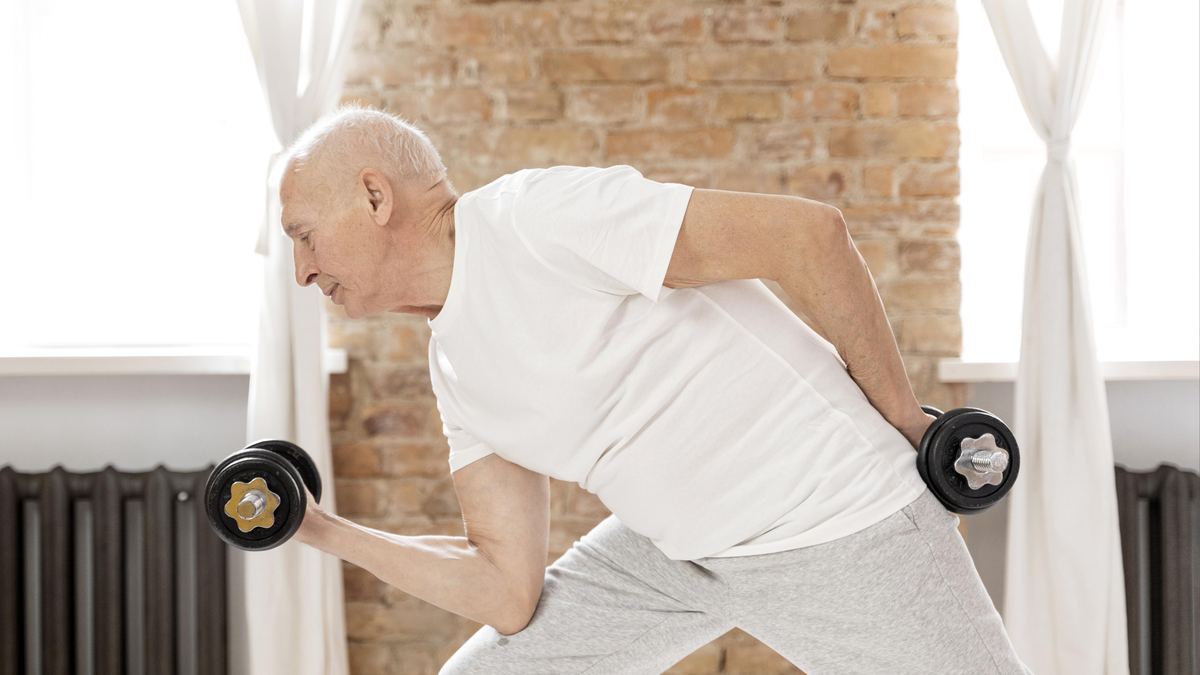
Sarcopenia is the loss of muscle strength, mass and function that comes with age. It raises the risk of falls, fractures, disability and loss of independence, and it lowers the body’s capacity to handle blood sugar. It is not inevitable: strength training and enough protein slow it down and can partly reverse it at any age.
Key takeaways
- European experts now define sarcopenia mainly by low muscle strength, confirmed by low muscle mass.
- Grip strength and the chair-stand test are simple screening tools.
- In a meta-analysis of 49 studies, resistance training added about 1.1 kg of lean mass in older adults.
- Protein spread across meals supports muscle maintenance.
What is sarcopenia?
Muscle mass and strength peak in early adulthood. In people who do not train, they decline gradually from middle age and faster after about 65. Strength falls faster than mass, because muscle quality and nerve control decline too.
In 2019 the European Working Group on Sarcopenia in Older People updated its definition:
- Probable sarcopenia: low muscle strength.
- Confirmed sarcopenia: low strength plus low muscle quantity or quality.
- Severe sarcopenia: all of the above plus poor physical performance, such as slow walking speed.
Why it matters for metabolism
- Blood sugar. Less muscle means less capacity to clear glucose after meals, which contributes to insulin resistance.
- Energy expenditure. Each kilogram of muscle uses about 13 kcal a day at rest, and losing it lowers daily calorie needs. See does building muscle increase metabolism?
- Activity. Weaker people move less, which further lowers energy use and fitness.
- Weight loss. Dieting without exercise removes muscle as well as fat, which matters more in older adults.
How is sarcopenia diagnosed?
| Test | What it measures | Low result (European cutoffs) |
|---|---|---|
| Grip strength (dynamometer) | Overall strength | Under 27 kg men, under 16 kg women |
| Chair stand: five rises without using arms | Leg strength | Over 15 seconds |
| Usual walking speed | Physical performance | 0.8 m per second or slower |
A doctor or physical therapist can do these tests and, if needed, measure muscle mass with a body scan.
Causes and risk factors
- Age and physical inactivity, the biggest factors
- Low protein and energy intake
- Chronic diseases such as diabetes, heart failure, kidney disease and cancer
- Bed rest and hospital stays, which can cause rapid muscle loss
- Lower levels of hormones such as testosterone and growth hormone
Prevention and treatment
Resistance training
Resistance training has the strongest evidence of any intervention. A meta-analysis of 49 studies with 1,328 older adults found an average lean mass gain of 1.1 kg with resistance training. Higher-volume programs produced larger gains, and the oldest participants gained somewhat less. Strength rises more than mass.
How to start: two or three sessions a week working the legs, hips, back, chest, shoulders and arms, using machines, free weights, bands or body weight. Choose a load that makes the last few repetitions hard and increase it gradually. The National Institute on Aging recommends combining strength, endurance, balance and flexibility exercises.
Protein
Older adults respond less strongly to small doses of protein. The PROT-AGE study group recommends at least 1.0 to 1.2 g of protein per kg of body weight a day for adults over 65, 1.2 g or more for those who exercise, and 1.2 to 1.5 g for most older adults with an acute or chronic illness. Spreading it across meals, with 25 to 30 g at each, makes the target easier to reach. People with severe kidney disease who are not on dialysis may need less, so they should agree on a target with their doctor. See protein and metabolism.
Daily movement and balance
Walking, climbing stairs and balance exercises such as tai chi reduce fall risk and keep daily energy use up. See walking and metabolism.
Vitamin D
In a meta-analysis of 30 trials, vitamin D supplements slightly improved muscle strength, mostly in people who started with low levels or were over 65, and did not increase muscle mass. See vitamin D and metabolism.
Safety
If you have heart disease, uncontrolled blood pressure, joint problems or recent surgery, check with a doctor before starting, and consider a few sessions with a physical therapist or qualified trainer.
Frequently asked questions
Is it too late to build muscle at 70 or 80?
No. In a classic 1990 study, frail nursing-home residents aged about 90 did eight weeks of high-intensity strength training. Their strength rose by 174 percent on average, and their walking speed improved.
Can I have sarcopenia if I am overweight?
Yes. Low muscle with high body fat, sometimes called sarcopenic obesity, is common and raises health risks.
Do protein shakes prevent sarcopenia?
They help only if your diet falls short of protein, and they work best combined with resistance training.
Sources
- Cruz-Jentoft AJ, et al. Sarcopenia: revised European consensus on definition and diagnosis. Age Ageing. 2019.
- Peterson MD, et al. Influence of resistance exercise on lean body mass in aging adults: a meta-analysis. Med Sci Sports Exerc. 2011.
- Bauer J, et al. Evidence-based recommendations for optimal dietary protein intake in older people: a position paper from the PROT-AGE Study Group. J Am Med Dir Assoc. 2013.
- Fiatarone MA, et al. High-intensity strength training in nonagenarians. JAMA. 1990.
- Beaudart C, et al. The effects of vitamin D on skeletal muscle strength, muscle mass, and muscle power: a systematic review and meta-analysis. J Clin Endocrinol Metab. 2014.
- National Institute on Aging. Four Types of Exercise Can Improve Your Health and Physical Ability.
- CDC. Older Adult Activity: An Overview.
Featured photo: magnific / Freepik